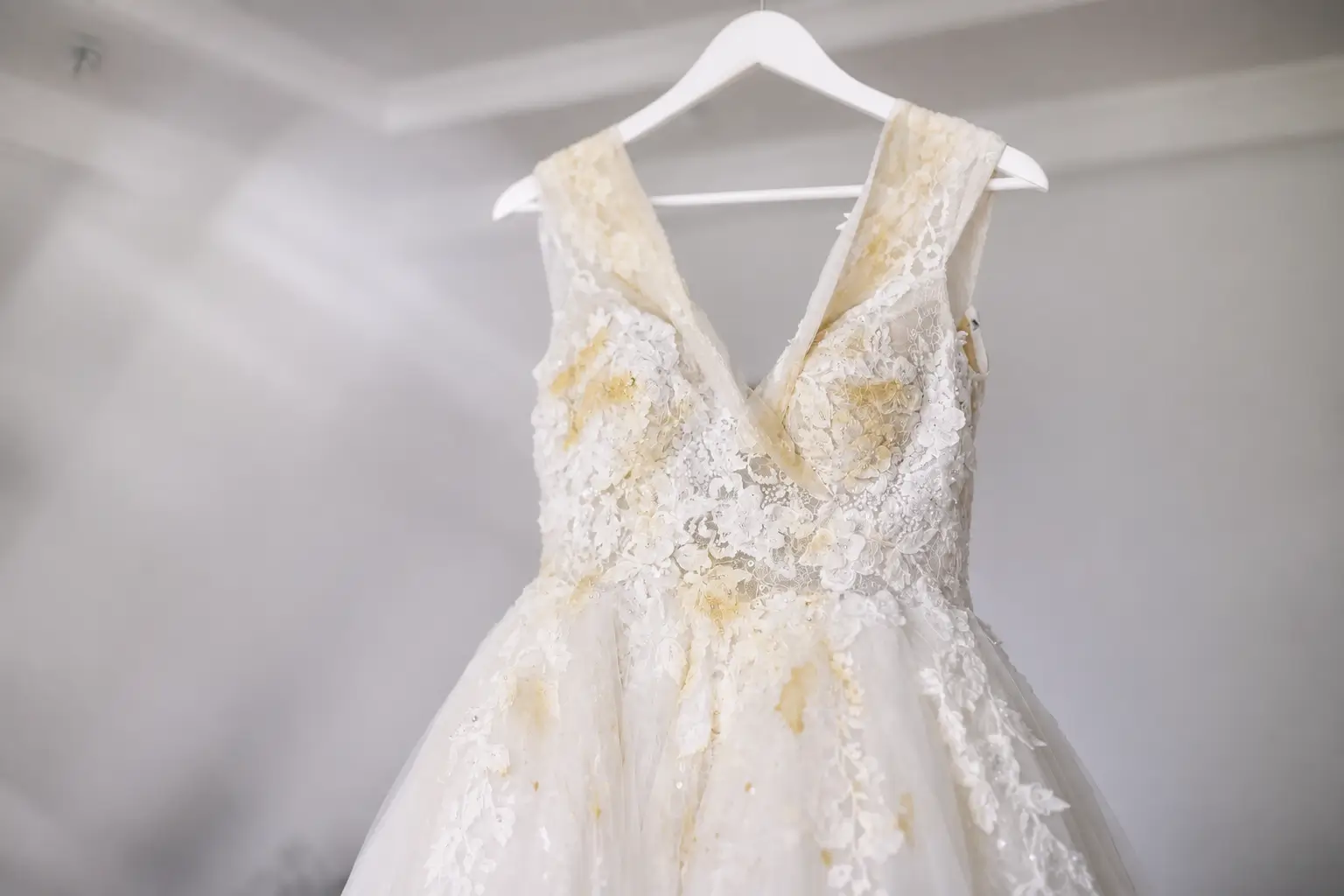
Your wedding dress didn't go into storage yellow, so something happened in between, and there are only three real explanations. Residue can sit invisibly in the fibers for years before it darkens. The fiber itself can age quietly, even on a spotless dress. Or the materials it was stored in or against can leave their own mark over time. None of the three means you did anything wrong.
Look closely at where the color actually shows, and it points straight to the cause.
This is the most common cause, and also the most preventable. Champagne, perspiration, body oils, hairspray, and even food from the reception can soak into fabric without leaving a visible mark on the day itself. The sugars and oils in that residue don't wash out on their own. They sit in the fibers and slowly oxidize, and months or years later they surface as yellow or brown patches.
This is why a dress that looked spotless when it went into the box can come out marked. The residue was always there. It just hadn't oxidized yet.
Oxidation is a chemical reaction, not a stain sitting on top of the fabric, so it takes time to surface. A champagne drop on the hem might take two or three years to darken. Deodorant residue near the underarms often shows up even later. "It looked fine when we packed it away" doesn't rule this out.
Even a perfectly clean dress will yellow eventually, because the fiber ages on its own. Silk is a protein fiber, and protein fibers gradually change color with exposure to light, air, and time. Other natural fibers oxidize slowly too, just through normal aging rather than anything spilled on them.
This is the one cause nobody can fully prevent. It's also the slowest of the three, and it tends to color the whole dress evenly rather than in patches.
Silk's protein structure is more reactive to light and oxygen than a synthetic fiber such as polyester, so silk dresses often show aging sooner. Polyester resists age-related yellowing well, but isn't immune to residue-based yellowing, since that cause has nothing to do with fiber type. A silk shell with a polyester lining can age unevenly between the two layers.
The third cause comes from outside the fabric rather than inside it. Ordinary cardboard boxes and standard tissue paper contain acids that migrate into fabric on contact over time. Sealed plastic bags trap moisture against the fibers, and that trapped humidity accelerates the other two causes instead of preventing them. Heat and light do the same thing, speeding up a process that would otherwise take much longer.
This is the cause most within your control right now, regardless of what's already happened to your dress.
A few conditions cause outsized damage over time:
None of these cause yellowing by themselves, but they all speed up cause one and cause two.
Because these three causes come from different sources, they leave different patterns. This is the part of the article you can actually use on your own dress.
If your dress looks flawless right now, this section is for you. Oxidation is slow and invisible until it isn't, which means a dress can carry residue today that won't show for another few years. Appearance isn't a reliable measure of what's actually in the fabric.
Cleaning before storage matters more than the box or bag it goes into. A dress can look immaculate while spills that never fully rinsed out still sit in the fibers, waiting to oxidize later. Removing residue early is the only step that addresses cause one, and it's the step people skip most, because the dress "already looks clean."
It depends on the cause, the fabric, and how long the yellowing has set in. Residue-based yellowing tends to respond well to professional treatment, often better than it looks like it should. Fiber aging is the hardest to address, since the fiber itself has changed. Contact staining from storage materials usually falls somewhere in between.
None of that can be judged from a photo. An in-person look gives you a real answer instead of a guess.
Professional wedding dress preservation isn't a single fix. Cleaning removes residue before it can oxidize, addressing cause one. Archival, acid-free materials and a stable environment prevent the outside damage in cause three. Neither stops fiber aging entirely, but slowing light and humidity exposure slows it down considerably.
Preservation can prevent future damage and often improve existing marks, but it can't reverse fiber aging that's already changed the chemical structure of silk. A dress that's aged evenly over twenty years won't come back to its original color, no matter how it's cleaned. Preservation slows and protects. It doesn't turn back time.
If you're reading this because your dress is currently in a box in your closet or your parents' attic, here's what to do today, at no cost.
Once it's out of harm's way, the next step is simply to have it looked at.
A patch that's just starting to show is far easier to treat than one that's had years to set in. You know the three causes now, so the next step is getting a real answer instead of a guess.
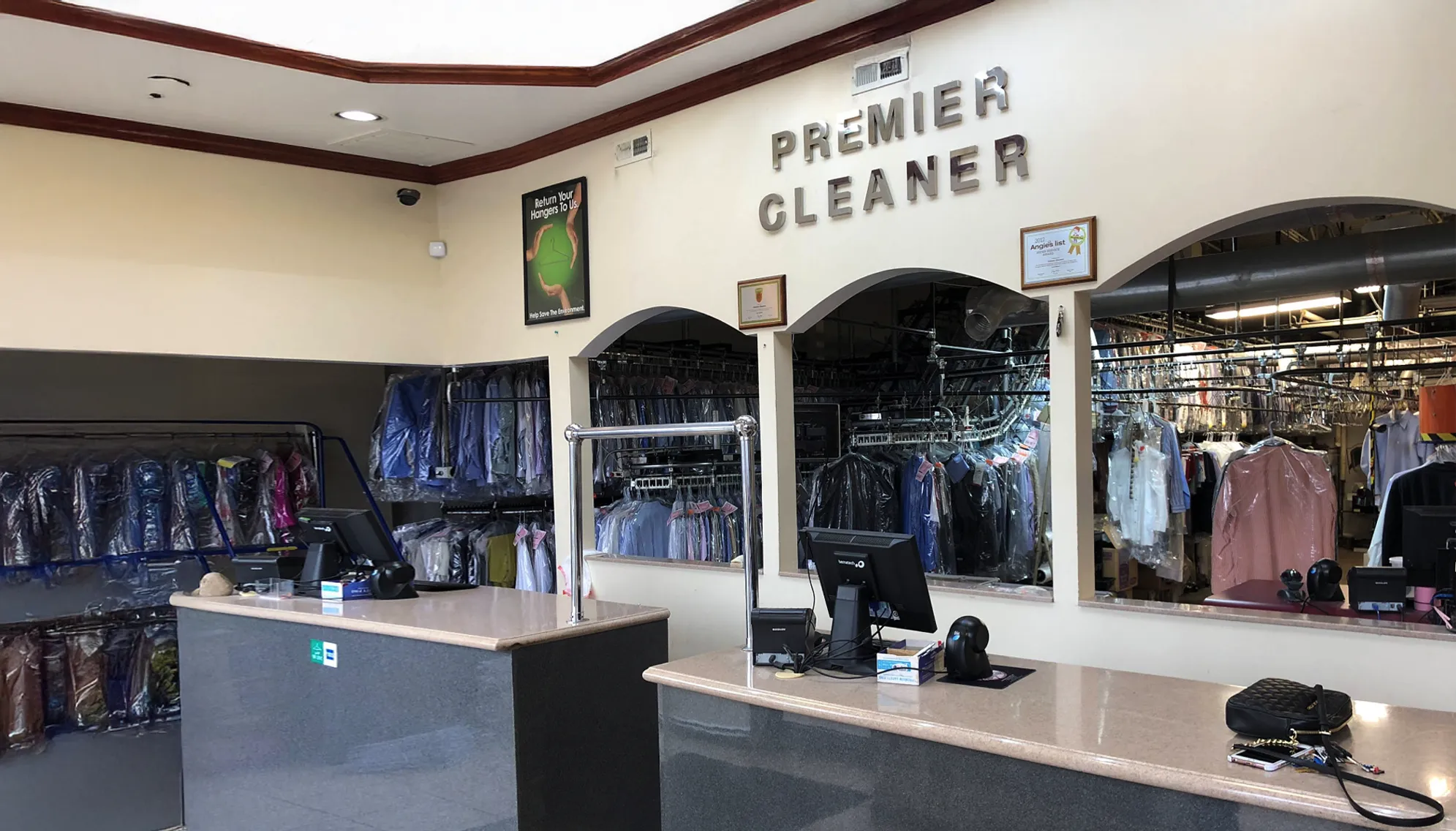
At Premier Cleaners, we treat every wedding dress that comes through our doors as a one-of-a-kind piece, not a routine order. We combine decades of experience with museum-quality preservation materials to protect your dress against yellowing, humidity, and time, and we handle everything in-house so nothing about the care of your dress is left to chance.
Schedule your Wedding Dress Cleaning and Preservation Service in Noblesville today, and let's keep your dress exactly as you remember it.
📍 Address: 154 medical drive Suite #100 Carmel Indiana 46032
📞 Phone: +1 317-848-1960
📧Email: info@premiercleanersindiana.com
🕒 Hours:
Monday to Friday: 7:00 AM to 6:00 PM
Saturday: 8:00 AM to 4:00 PM
Sunday: Closed