
You've run it through the wash twice, maybe three times, and the stain just won't move past a certain point. That's not a sign you're doing laundry wrong. This is exactly the gap dry cleaning is built to close, since a washing machine and a solvent-based process aren't actually solving the same problem.
Makeup is made from oils, waxes, and pigments, while a washing machine only works with water, and the two don't mix. On a collar or cuff, that mismatch shows up fast, since those spots already carry oils from regular wear before makeup ever touches them. The fading you're seeing is the fabric's limit, not yours. Here's why it happens, and what actually gets it out.
Most cosmetics, whether foundation, concealer, or lipstick, are built on oils and waxes. That's what lets them glide on smoothly and stay put all day. A washing machine, though, runs on water.
Water and oil don't mix, the same way they don't in a kitchen sink. A cycle rinses away some surface pigment, but the oil bound into the fibers barely moves. The shirt comes out looking a little better, not actually clean, which is likely what you've already seen.
Laundry detergent targets protein, starch, and everyday grime through enzymes and surfactants. Cosmetic oils and waxes aren't on that list. So when a stain fades a bit with each wash, it's surface pigment loosening while the oil base stays put. That's an improvement, not a fix, which is why the stain plateaus instead of disappearing.
A cosmetic mark isn't one substance. It has an oil or wax body, plus a separate pigment held inside it. Washing only ever touches part of that.
Water lifts some surface oil, and a bit of pigment goes with it, leaving a faded, greyish version of the mark that no amount of rewashing moves further. If your stain lightened and then stopped improving, that's what happened. Stop washing it; don't reach for hotter water.
That leftover grey cast has its own cause. Oil left in fabric oxidizes over time, the same way an avocado browns once cut open. The longer it sits, the more it darkens and dulls the surrounding fibers, which is why an older mark often looks worse than a fresh one even though nobody's touched it since.
Location matters more than most people expect. Collars and cuffs already carry body oils and perspiration residue from ordinary wear, so a cosmetic mark isn't landing on clean fabric. It's landing on fabric that's already oil-loaded, which makes the new stain both more stubborn and more likely to darken over time.
Those same spots are also the most visible parts of a shirt or blazer. A mark near the hem would go unnoticed for months. A mark on the collar gets seen every time you put the garment on.
Sweat isn't neutral. It carries salts and shifts the fabric's surface pH, and that chemistry can make cosmetic pigments bind more tightly than they would on a clean patch of fabric. That's part of why a collar stain resists home treatment more than the same product would elsewhere on the garment.
Modern cosmetics have gotten better at their job, and that's the complication here. Products marketed as long-wear, transfer-proof, or water-resistant are formulated to resist the things that would otherwise remove them, often through water-resistant film-forming ingredients. That works exactly as intended on skin through a full workday. It also works on a collar.
This isn't a reason to stop using them, just useful context for why some marks behave completely differently, even when they look similar side by side.
The packaging usually signals the risk ahead of time. Words like 24-hour wear, budge-proof, or transfer-resistant mean the formula was engineered to resist exactly the removal methods a home wash relies on. That won't prevent a mark, but it does set realistic expectations if one happens.
This is the part that matters most if you're reading this because you've already tried something. Here's what actually helps:
And here's what to avoid, because each of these makes the outcome worse rather than better:
If the mark is less than a day old and hasn't been through a hot dryer, your odds are still good, so stop treating it further and get it professionally cleaned soon. If it's already been washed multiple times and the color has flattened into a grey shadow, treat that as a sign the oil is set, and skip any more DIY attempts entirely. Either way, the fastest path to a good outcome is doing less, not more.
Whatever you do, keep it out of the dryer. Heat is the one step that turns a treatable mark into a permanent one, and once that happens, no cleaner can undo it.
This is the direct question, and the honest answer is a qualified yes rather than a guarantee. Dry cleaning solvent dissolves oil the same way water dissolves sugar, which addresses the exact part of the stain a home wash can't touch. Pigment can then be pre-spotted and treated separately from the oil base.
That said, the odds shift depending on the mark:
No dry cleaner can promise a stain will disappear completely, and you should be skeptical of anyone who tells you otherwise. What a professional can promise is giving the mark its best possible chance, using tools a washing machine simply doesn't have.
Before a garment ever reaches the solvent cycle, a trained technician examines the mark under light, tests a small area for colorfastness, and applies a targeted spotting agent matched to the specific type of stain. This step happens by hand and takes real judgment, which is the main reason a professional result differs so much from a home attempt using a generic stain stick.
The same mark is a different job depending on what it's sitting on.
Set your expectations by fabric, not by the stain alone. The same lipstick mark can be a routine fix on cotton and a genuinely difficult job on a structured blazer.
A cotton-poly blend, common in workwear and dress shirts, behaves like a mix of both parent fibers. The cotton portion accepts treatment reasonably well, while the synthetic portion resists it slightly, which is why blends often land in the middle of the difficulty scale rather than at either extreme. If your garment tag lists a blend, expect results closer to cotton than to a fully synthetic fabric, but not quite as forgiving.
None of this is about avoiding makeup. It's about a few small habits that reduce how often it ends up somewhere you didn't intend.
If you've made it this far, you already know a wash cycle only gets you halfway there. That's exactly where our dry cleaning process comes in.
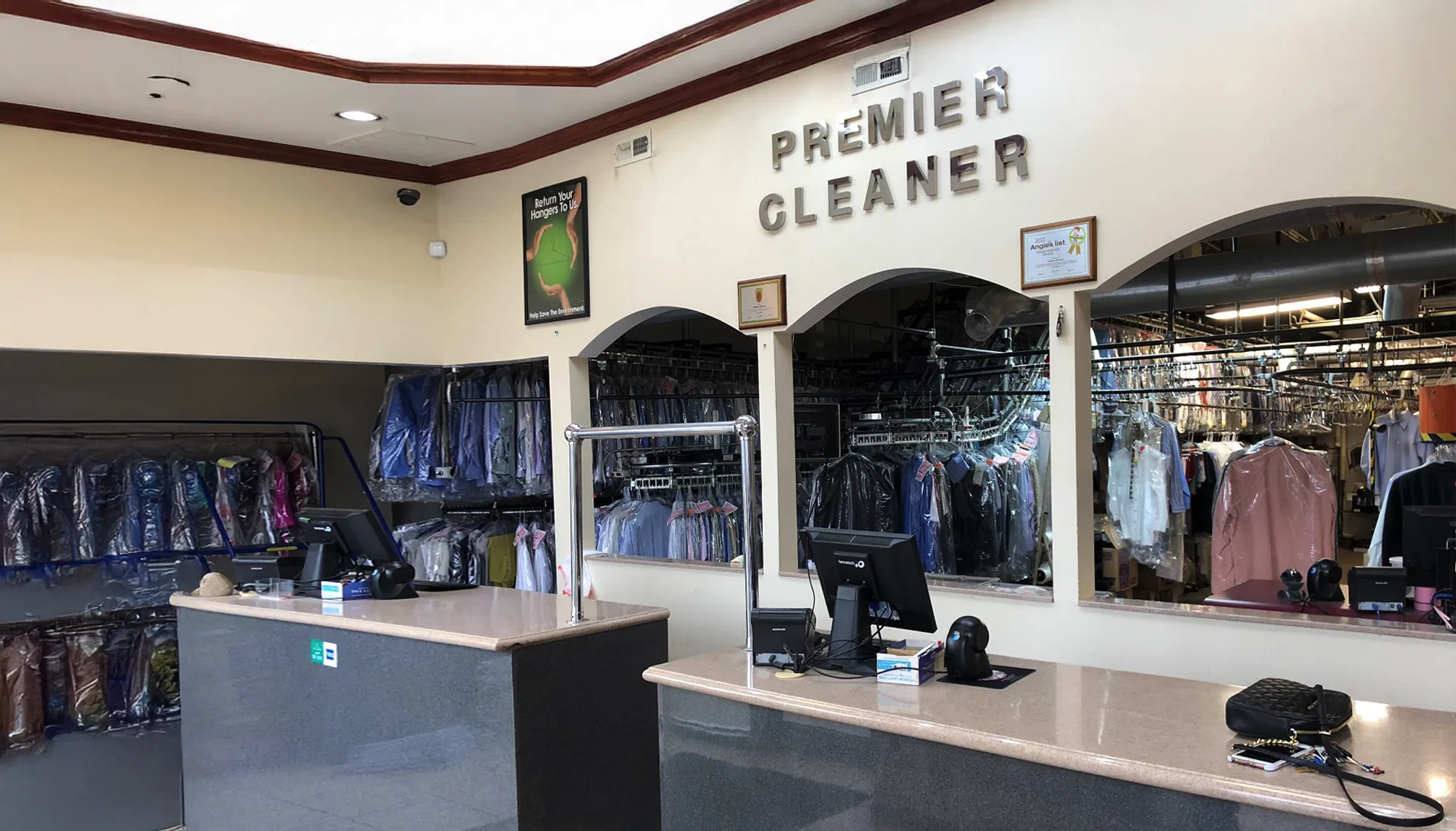
At Premier Cleaners, every garment that comes through our doors gets inspected by hand, not run through a generic cycle. We assess the fabric, the mark, and how long it's been there, then treat it accordingly, whether that's a cotton shirt collar or a structured blazer. It's the same standard we hold for every piece we touch: real care, not a shortcut.
Bring your collar or cuffs in before they get any older, or let us come to you with free pickup and delivery across Carmel and nearby areas.
Address: 154 medical drive Suite #100 Carmel Indiana 46032
Phone Number: +1 317-848-1960