You just landed a new job and need that blazer to look sharp. Or you moved to a new place recently and have absolutely no idea where to take your “dry clean only” pieces. Maybe there’s a wedding coming up, and the dress you’re wearing cannot, under any circumstances, come back damaged.
Whatever brought you here, you need a dry cleaner you can trust, not just the closest one on the map. This guide gives you the specific criteria and concrete red flags that separate a good dry cleaner from a risky one.
If you’re new to Carmel Indiana, or have never needed dry cleaning until now, here’s exactly what to look for and what to avoid.
The First Indicator: How the Counter Staff Handles Your Drop-Off
Most people hand over their garments, get a ticket, and leave. That intake moment is actually the most revealing thing about any dry cleaner, and most customers miss it entirely.
What to Watch for at the Counter
✓ What Good Looks Like
- Staff examines each garment before accepting it, checking for existing stains, fragile areas, and care label requirements.
- Staff asks about any specific concerns: stains you want addressed, areas to be careful with, timeline requirements.
- Each item is tagged and logged before it disappears into the back. You receive a ticket that itemizes what you left.
- Staff confirms the care label and mentions how they’ll approach the garment.
⚠ What a Red Flag Looks Like
- Garment is accepted without inspection, tossed into a bin or onto a pile without examination.
- No stain conversation, no questions about the garment at all.
- No ticket or tracking system visible. No way to tie you to your specific garments.
- No mention of care requirements. No indication they’ve read the label.
The question to ask at drop-off:
“Can you look at this stain and tell me what you think you can do with it?” A confident, competent staff member answers specifically: “That looks like an oil-based stain on silk. We’ll pretreat it with a solvent before cleaning. It should come out, but if there’s any remaining shadow, we’ll let you know before you pick it up.”
Vague answers such as “we’ll do our best” are a yellow flag. They’re not necessarily dishonest, but they suggest the person at the counter doesn’t know the process well enough to explain it.
Why the Intake Conversation Predicts Everything That Follows
How the staff handles the drop-off tells you how they’ll handle your clothes once you’re gone. If they’re not paying attention at the counter, they’re not paying attention in the back either. The intake process isn’t a formality. It’s quality control, step one.
What to Ask About Specialty Garments Before Handing Them Over
If you’re reading this, there’s probably a specific garment on your mind. A silk blouse. A sequined gown. A cashmere coat. Before you hand it over, ask the cleaner directly how they’d handle a piece like yours, and listen closely to how they answer.
Questions to Ask Before You Commit
- “Do you have experience cleaning this type of garment?” Name the fabric or construction: silk, sequined gown, cashmere, leather, structured blazer. A cleaner who handles specialty garments regularly answers without hesitation and describes their approach.
- “How would you clean this specifically?” This is the question that separates expertise from willingness. A good cleaner leads the conversation: “That’s silk charmeuse with a beaded neckline. We’d hand treat the beading, clean with a gentle solvent, and finish on a form to maintain the drape.” A cleaner who defers to you (“How do you want us to handle it?”) signals they don’t have a standard protocol for this garment type.
- “Is this done here at your facility, or does it go out?” Many dry cleaners that advertise specialty garment care actually send those items to a third-party facility. That’s not inherently bad, but it reduces direct accountability. If it goes elsewhere, ask who the facility is and what happens if the garment is damaged in transit.
The test that matters most: A cleaner who is confident in their capabilities leads the conversation. They tell you how they’ll handle the garment. They don’t ask you what you want done. Expertise shows up as confidence. A cleaner who knows cashmere tells you about moisture, low heat, and gentle agitation without you asking.
How to Read Online Reviews for Dry Cleaners
A 4.7-star rating with 200 reviews sounds reassuring. But general star ratings are insufficient for evaluating a dry cleaner. What those reviews actually say matters far more than the number next to the stars.
What to Search for Specifically
- Reviews that mention specific garment types: “my wedding dress,” “a silk blouse,” “my husband’s suits.” These tell you if the cleaner has handled garments similar to yours and the outcome.
- Reviews that describe specific stain outcomes: “removed a red wine stain from my tablecloth perfectly” is more useful than “great service!” The specificity signals a real experience, not a polite gesture.
- Reviews that mention turnaround time, communication, or how the cleaner handled a problem. These are the operational details that predict your experience.
What to Look for in Negative Reviews
- One off complaints vs. recurring patterns. A single complaint about a lost button is less concerning than multiple reviews mentioning lost items or unexplained damage. The pattern is what matters, not the individual event.
- How the business responds to negative reviews. A cleaner who acknowledges the problem, apologizes specifically, and describes what they did to resolve it demonstrates accountability. A cleaner who dismisses, argues, or goes silent tells you how they’ll handle your complaint, too.
The Red Flags That Should Make You Walk Out Before You Leave Your Clothes
Not every mediocre cleaner announces itself with a disaster. Most red flags are quieter than that. They show up in what doesn’t happen during your drop-off, and what you don’t hear when you ask a question.
- No inspection at drop-off. The garment is accepted without anyone looking at it. If they don’t examine it before cleaning, they’re not going to treat it with precision during cleaning.
- No ticket or tracking system. You hand over a garment and receive nothing that ties you to it. No tag, no receipt, no itemized list. This means there’s no documented chain of custody for your clothes.
- Unable to explain what will happen to the garment. You ask how they’ll clean your silk blouse, and the answer is vague, evasive, or non-specific. If the staff can’t describe the process, the process may not exist.
- No pricing communicated up front. You leave your garment without receiving a quote or estimate. If the cost is a surprise at pickup, the communication standards are not where they need to be.
- The garment will be sent to a third-party facility without disclosure. You assume the work is done on-site. Later, you learn it was shipped elsewhere. This isn’t necessarily a quality issue, but the lack of transparency is.
- Promising to remove all stains without examining them. Stain outcomes depend on stain type, fabric, age, and prior treatment. Any blanket guarantee of complete removal is either uninformed or dishonest. A good cleaner gives you a realistic assessment after looking at the stain, not a promise before.
Your Clothes Deserve Better – Premier Cleaners Indiana Delivers It, Always!
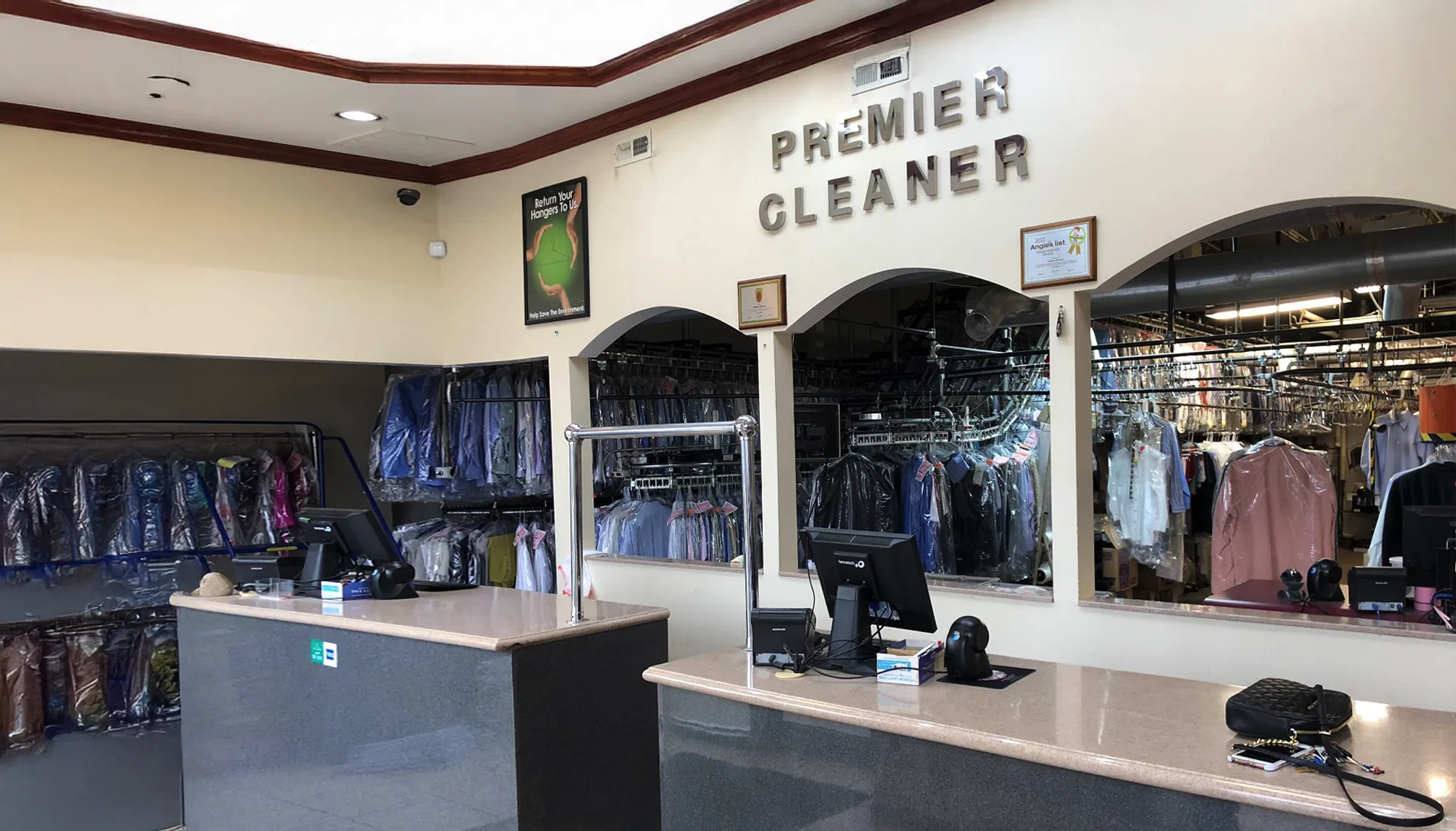
At Premier Cleaners, we inspect every garment at drop-off, communicate clearly about stains and specialty pieces, and handle your clothes with eco-conscious solvents that clean thoroughly without compromising fabric integrity. What truly sets us apart is our hands-on service. All cleaning is done onsite by experienced professionals who take pride in their work.
And if you’re short on time, our FREE Pickup and Delivery Service makes the process effortless.
Come visit us today, or contact us at any of the following:
Address: 154 medical drive Suite #100 Carmel Indiana 46032
Phone Number: +1 317-848-1960
HOURS:
Monday - Friday: 7:00 AM – 6:00 PM
Saturday: 8:00 AM – 4:00 PM
Sunday: Closed